Lodhi Samaj Scholarship Test Result Out 2026

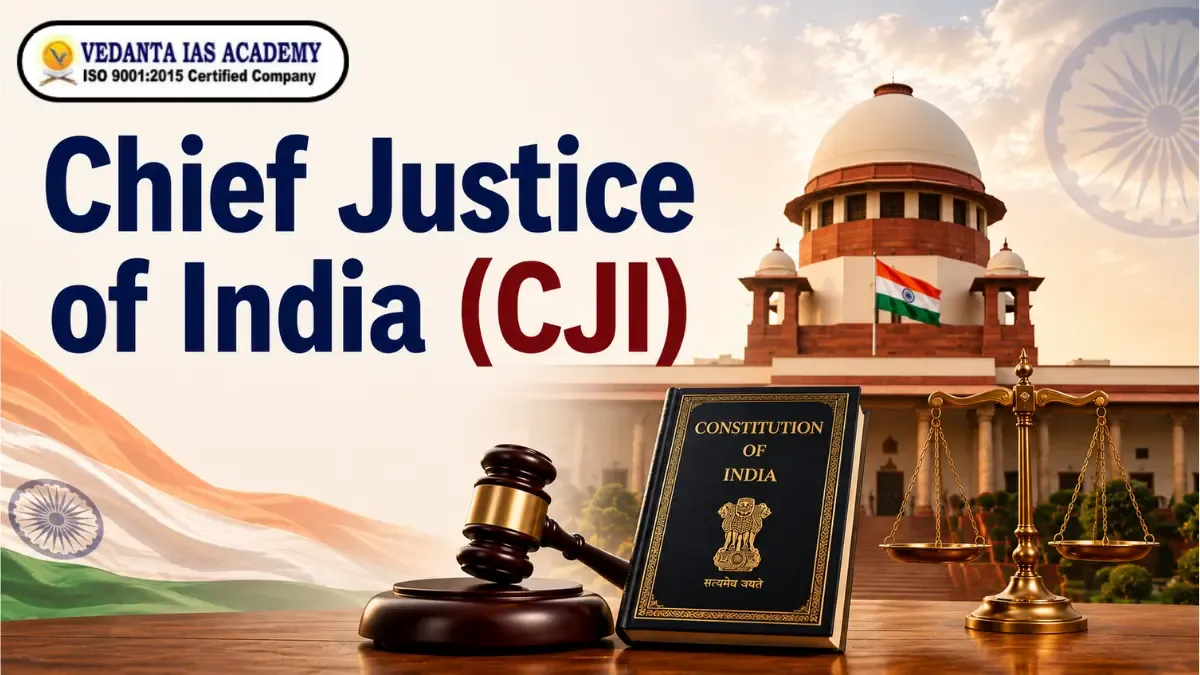

The Chief Justice of India (CJI) is one of the most important constitutional functionaries in the country. The CJI heads the Supreme Court of India and is the chief of the Indian judiciary. The role of the CJI is way beyond hearing court cases. The CJI protects the Constitution, protects the rights of citizens, runs the Supreme Court and helps in maintaining the rule of law. It is very important for UPSC students, judiciary aspirants, and general readers to understand the powers of Chief Justice of India, salary, tenure, and constitutional role. Let us learn everything in a simple way.
The Chief Justice of India (CJI) is the senior-most judge of the Supreme Court of India.
The CJI acts as:
The office of the CJI is created under the Indian Constitution. The President of India appoints the Chief Justice of India. In India, there is a strong convention of appointing the senior-most Supreme Court judge as the next CJI. This practice supports judicial independence and reduces political influence. The Chief Justice works closely with other Supreme Court judges to ensure that justice is delivered fairly and quickly.
Many students ask about the eligibility of the Chief Justice of India. The Constitution does not provide separate rules only for the CJI. A person must first be qualified to become a Supreme Court judge.
The qualifications of CJI are based on the constitutional qualifications required for Supreme Court judges.
A person must satisfy these conditions:
These rules ensure that the person has strong legal knowledge and courtroom experience. For example, most Chief Justices of India have served as judges in High Courts and later in the Supreme Court before becoming the CJI.
The appointment is governed mainly by the provisions of Article 124 of the Indian Constitution.
Article 124 provides for:
The Chief Justice of India is formally appointed by the President. But this process usually proceeds on the basis of the seniority convention. Usually, the senior-most judge of the Supreme Court becomes the next CJI. This convention is important because it helps to protect judicial neutrality and institutional trust.
The powers of the Chief Justice of India are wide and powerful. The functions of CJI include judicial duties, administrative control, constitutional responsibilities, and advisory roles.
Let’s understand them one by one.
The CJI has major judicial powers.
The Chief Justice hears important cases involving:
The Supreme Court is the highest court in India. So, decisions made under the leadership of the CJI affect the whole country. For example, cases related to constitutional interpretation, reservation policy, privacy rights, and major governance issues often involve the Supreme Court. The CJI also plays a major role in protecting the basic structure of the Constitution.
This is one of the most important functions of CJI.
Many people think the CJI only gives judgments. But that is not true.
The CJI is also the administrative head of the Supreme Court.
Administrative powers include:
The CJI ensures that the Supreme Court functions smoothly and efficiently.
Without strong administration, thousands of cases could face delay.
The CJI also has an important advisory role .
Under Article 143, the President of India can seek the opinion of the Supreme Court on important legal or constitutional questions. In such situations, the CJI helps form the bench and guide the judicial discussion. Although this advice is not always binding, it carries great constitutional value. This shows the strong constitutional role of the Chief Justice of India in governance.
One of the most important powers of Chief Justice of India is forming Constitution Benches. A Constitution Bench usually includes five or more judges.
These benches hear cases involving:
The CJI decides when such benches are needed. Many historic judgments in India have come from Constitution Benches. This power gives the CJI a very important position inside the judicial system.
The CJI is known as the “Master of the Roster.”
This means the CJI decides:
Case allocation is a powerful administrative responsibility. Proper case allocation helps maintain judicial efficiency and fairness. This role directly affects how justice moves through the Supreme Court.
The Chief Justice of India salary is fixed by law.
At present, the CJI receives a salary of approximately ₹2.8 lakh per month.
But salary is not the only benefit.
The Chief Justice also receives:
These facilities are given because the office carries very high responsibility and national importance.
The salary and benefits help maintain the dignity and independence of the judiciary.
The retirement age of the Chief Justice of India is a major constitutional issue.
The CJI’s retirement age is 65 years. The tenure of Chief Justice depends on the age of the person when he becomes CJI. A few chief justices serve for many years. Some may only last a few months.
The CJI may leave office through:
The removal process for Supreme Court judges is strict because judicial independence must be protected.
India has had many Chief Justices since independence.
Some important Chief Justices include:
Every Chief Justice has contributed to shaping India’s legal and constitutional system.
The constitutional role of Chief Justice of India is extremely important in a democracy.
The CJI helps:
In a democracy, courts protect citizens against misuse of power. The CJI plays a major role in maintaining this protection. Without an independent judiciary, democracy can become weak. That is why the office of the Chief Justice of India is highly respected.
The Chief Justice of India (CJI) is the highest judicial authority in India. The office carries huge responsibility and constitutional importance.
Understanding the powers of Chief Justice of India, functions of CJI, qualifications of CJI, salary, tenure, and constitutional role is important for UPSC preparation, legal studies, and general knowledge.
The CJI does much more than hear cases. The CJI protects democracy, defends constitutional values, and helps maintain justice across the country. Understanding this role gives us a better understanding of how India’s judicial system works.
Q1. What is the full form of CJI?
The full form of CJI is Chief Justice of India.
Q2. Who appoints the Chief Justice of India?
The President of India appoints the Chief Justice of India.
Q3. Which Article deals with the Chief Justice of India?
Article 124 mainly deals with the Supreme Court and appointment of judges.
Q4. What is the salary of the Chief Justice of India?
The Chief Justice of India salary is approximately ₹2.8 lakh per month.
Q5. What is the retirement age of the Chief Justice of India?
The Chief Justice of India retirement age is 65 years
No comments yet. Be the first to comment!